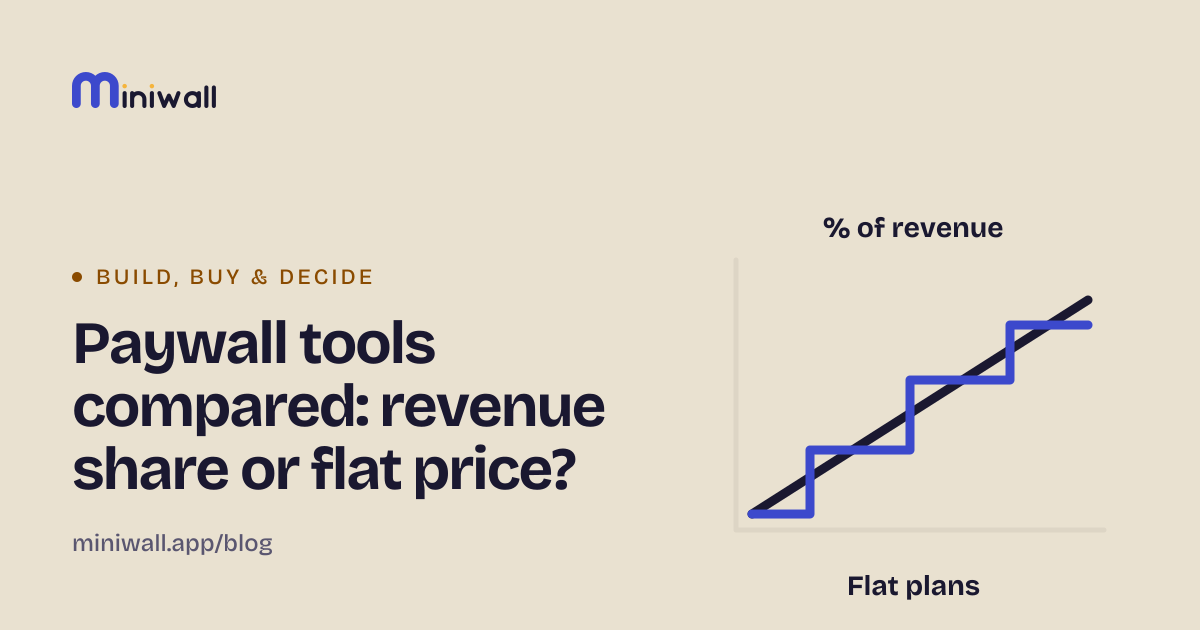
Paywall tools compared: revenue share or flat price?
Superwall, RevenueCat, Adapty and Miniwall charge in different ways. What each model does to your bill, what each tool is for, and when not to pick ours.
Topic
Build or buy, pricing models and third-party risk: checklists for the calls tech leads and founders make about tools they depend on.
8 posts
Superwall, RevenueCat, Adapty and Miniwall charge in different ways. What each model does to your bill, what each tool is for, and when not to pick ours.
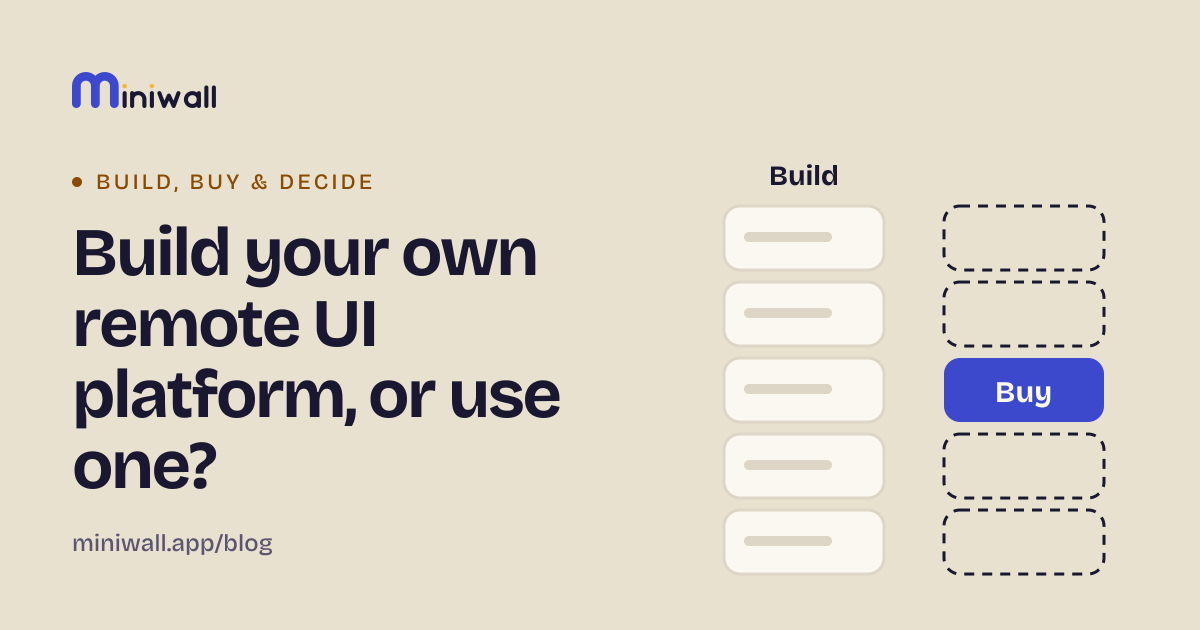
What an in-house remote UI platform really includes, what you rent when you buy one, and the questions to ask either way. Written by a vendor.
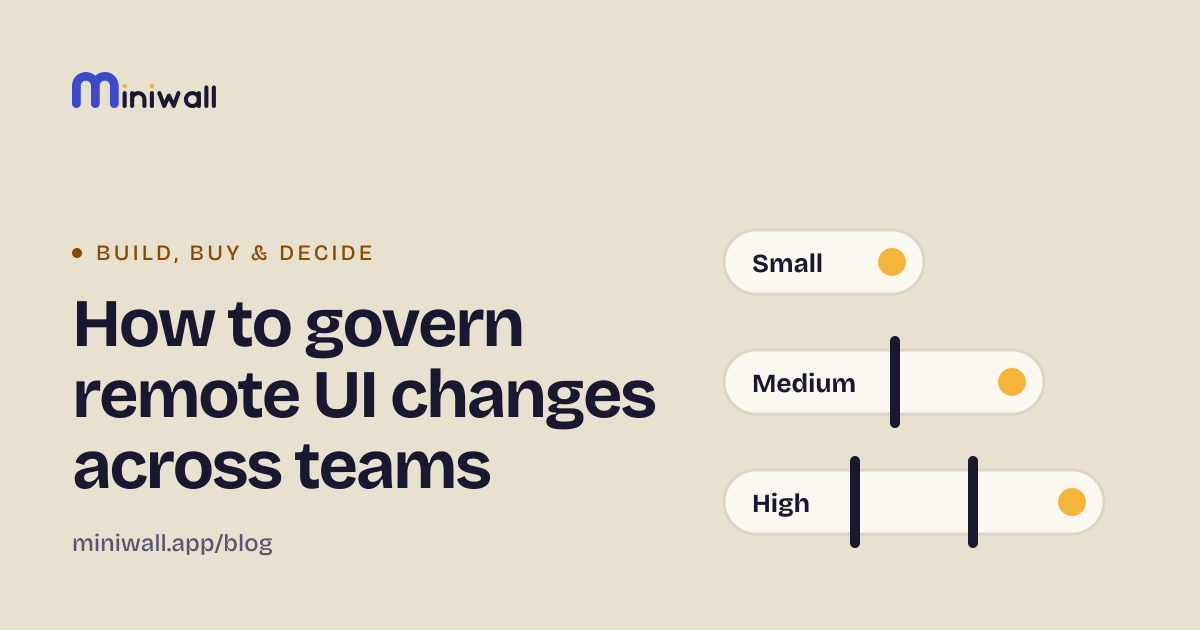
Changes that skip the release need their own rules. Tier the changes, decide who approves each, plan the way back, and rehearse it.
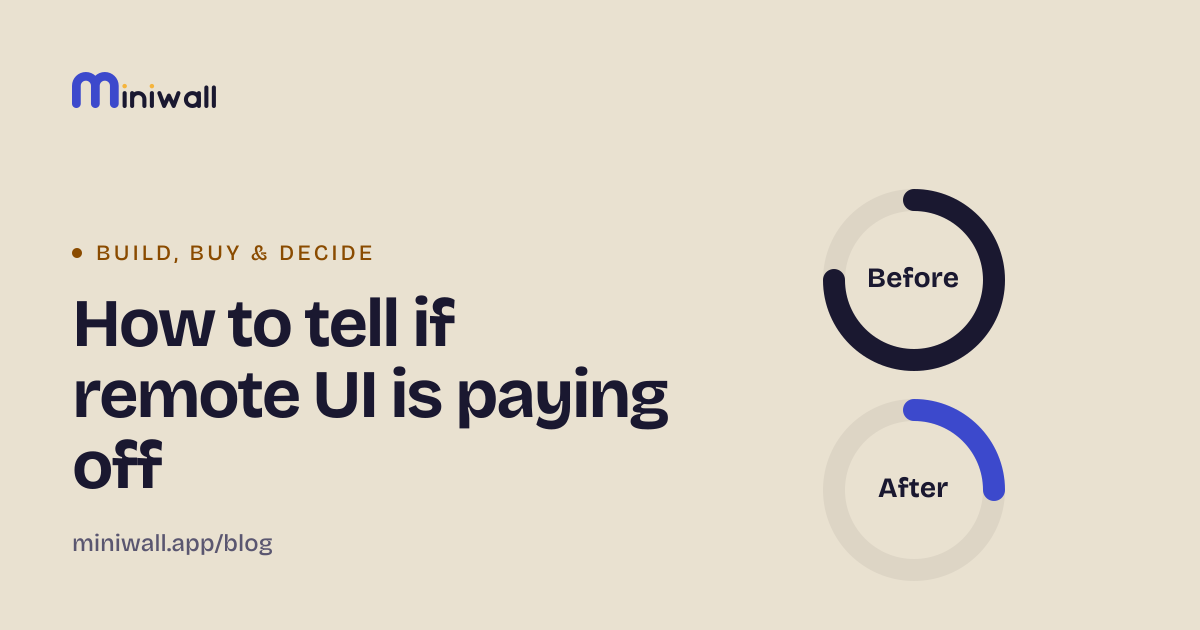
Moving screens out of the release is a bet. Four measures to check it, a way to read them honestly, and the signs that it isn't working.
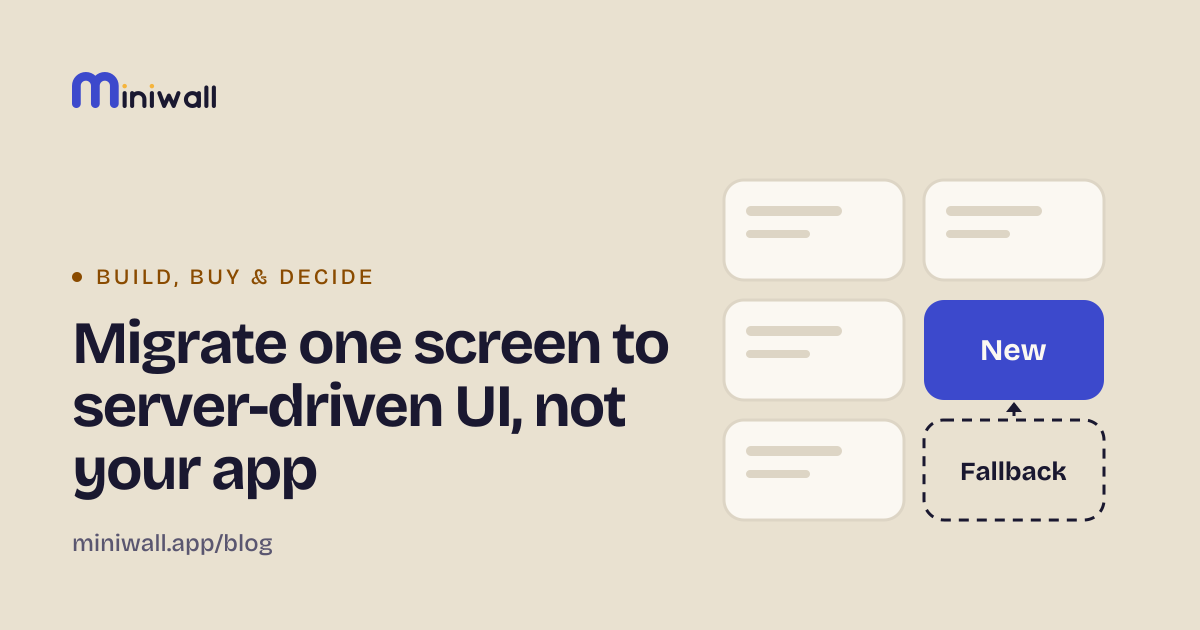
A low-risk way to start: move one screen that changes often, ask for it by name, and keep the old native screen as the way out.
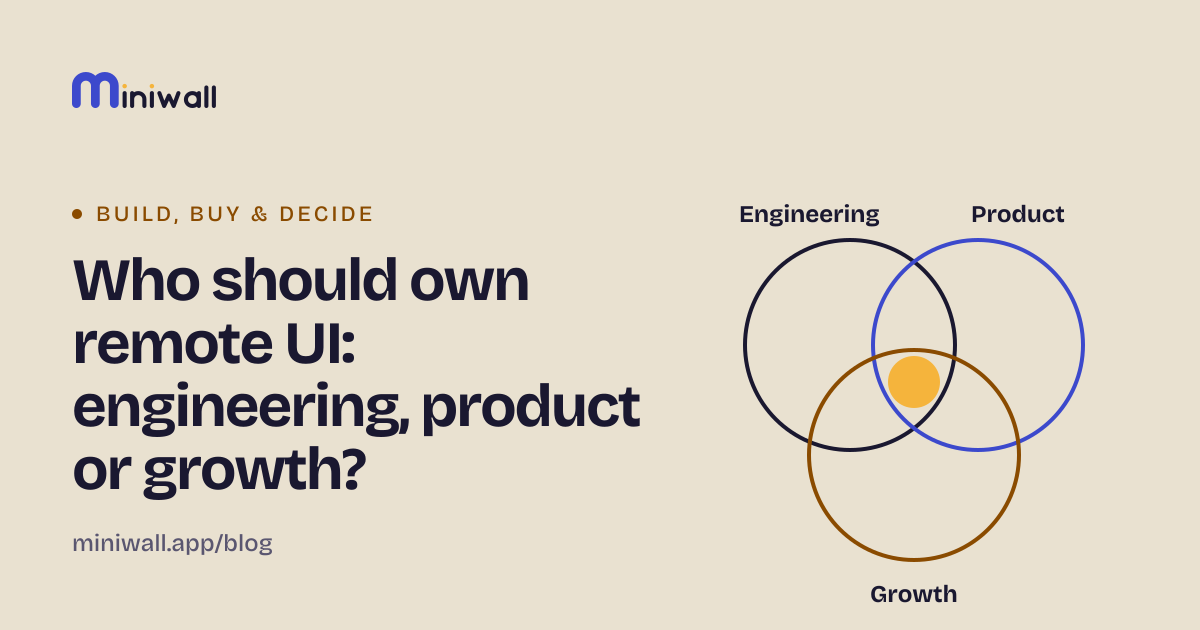
Owning remote UI is four decisions, not one. A way to split them between engineering, product and growth, and what goes wrong when nobody does.
Five cases where server-driven UI costs more than it saves: rare changes, heavy interaction, hot paths, version-exact flows, no owner. A test for each.
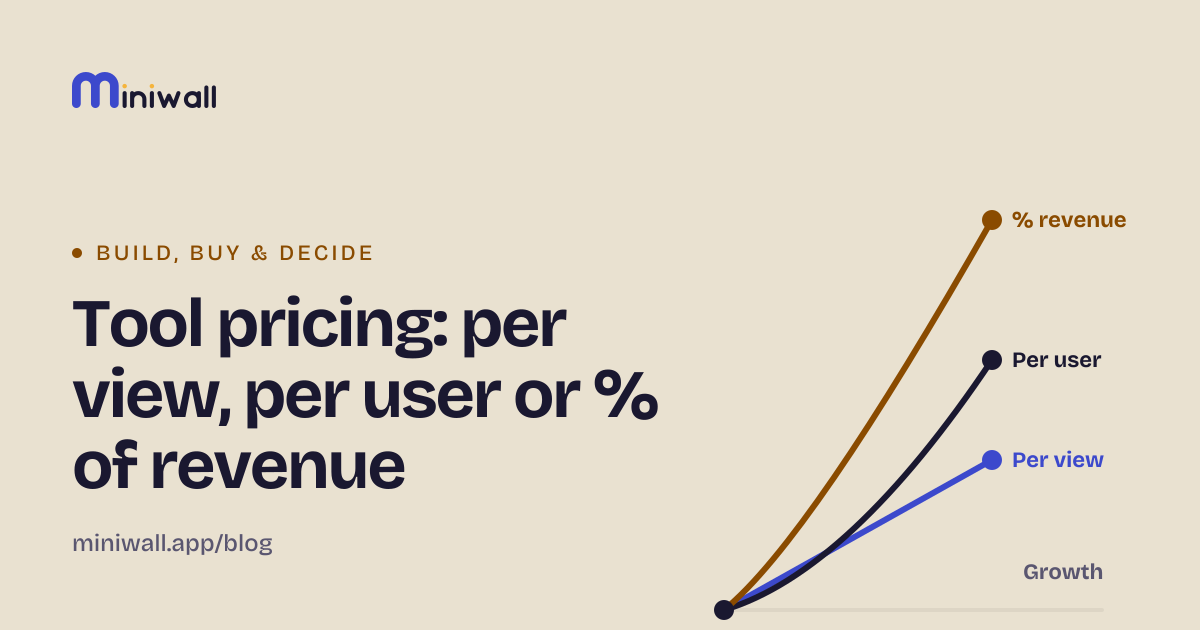
Per view, per active user or a share of revenue: what each model does to your bill as you grow, with worked numbers and questions to ask any vendor.